
Quick answer: When our educators set up a hospital dramatic play corner that is complete with stethoscopes, bandages, a waiting room, and a "patient" bed, the children didn't just play doctors and nurses. They practised empathy, worked through real fears about visiting the doctor, built vocabulary, and learned to problem-solve together. It's a perfect example of why the right early learning centre Sydney families choose can turn a simple pretend-play activity into genuine, lasting development.
This is the story of what unfolded when we set up a hospital dramatic play experience at our centre, why it mattered so much more than it looked on the surface, and what it tells us about the real value of learning through play.
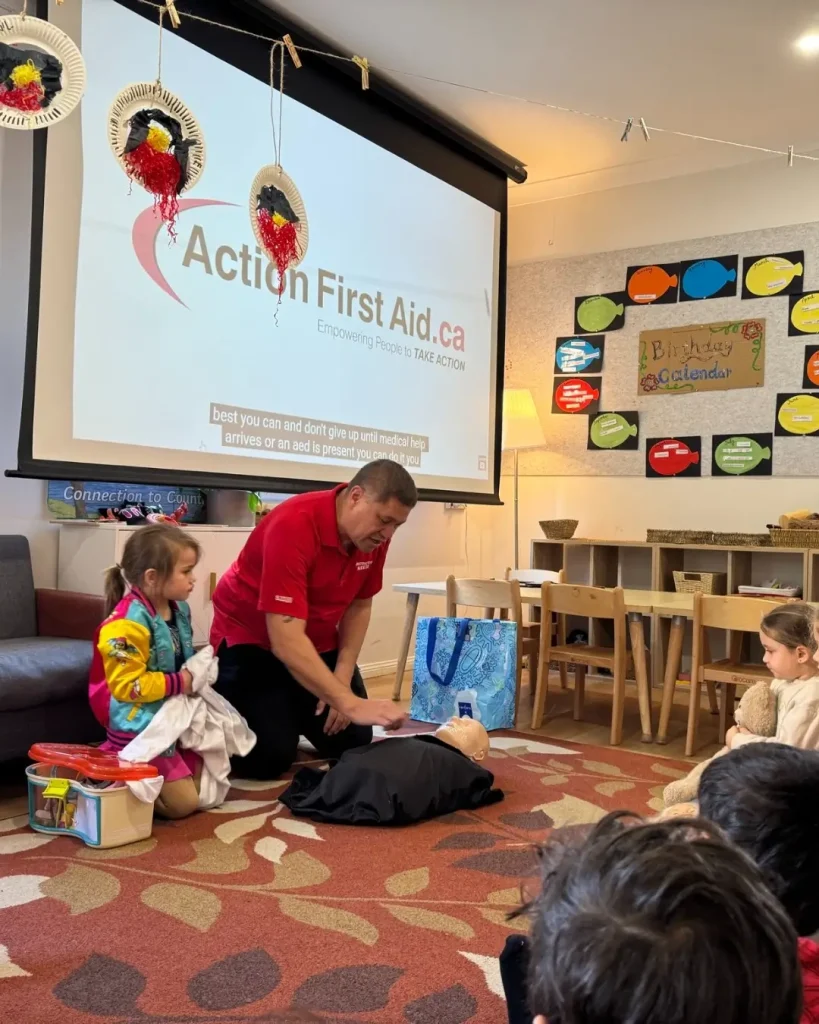
Important role paramedics play in our community
Almost immediately, children began assigning themselves roles as doctor, nurse, receptionist, patient and often without any prompting from educators. Some children who are usually quieter in group settings became confident "doctors," calmly instructing their "patients" and taking real ownership of their role.
One of the most striking things we noticed was how dramatic play gave children a safe way to process real worries. A few children who'd mentioned being nervous about upcoming doctor's visits used the hospital corner to "practise", administering pretend injections, checking hearts, and talking through what happens at a check-up. By the end of the week, several parents told us their children seemed noticeably calmer heading into real medical appointments.
We watched children comfort their "patients," reassure each other, and take turns caring for one another. A skills that don't always come naturally at this age, but which dramatic play seems to draw out in a really genuine way. This kind of role-based empathy building is well recognised in early childhood education research as one of the strongest developmental benefits of pretend play.
New words like "stethoscope," "bandage," "appointment," and "patient" started appearing in everyday conversation not because we drilled them, but because the children needed and wanted to use them to play their roles convincingly.
Who gets to be the doctor first? What happens if there are three patients and only one doctor? These are exactly the kinds of small social problems that dramatic play naturally creates, and exactly the kind of early problem-solving and negotiation skills that set children up well for both school and life.
Educational research consistently points to dramatic and imaginative play as one of the most valuable tools in early learning. Through pretend scenarios like this, children develop:
This is exactly why learning through play isn't just a nice-to-have in early childhood education. It's one of the most effective ways young children genuinely learn.
Not every childcare setting approaches play the same way. The value of dramatic play comes from thoughtful, intentional educators who understand child development, not just from having a box of props sitting in the corner. At a genuinely play-based childcare centre, educators actively observe, extend, and gently guide these experiences to get the most developmental value out of them, while still letting children lead the way.
This is exactly the approach we take at Wonder Years. Our educators are trained to design experiences, like our hospital dramatic play corner that go far beyond simple entertainment, helping children build the social, emotional, and cognitive foundations they'll carry with them well beyond their early years.
Moments like our hospital dramatic play activity are exactly why we love what we do, and watching children grow, connect, and learn through experiences that feel like pure fun on the surface, but build real skills underneath.
Wonder Years offers warm, experienced educators and thoughtfully designed learning experiences across our childcare Sydney locations.
Book a tour of your nearest Wonder Years childcare centre today.